

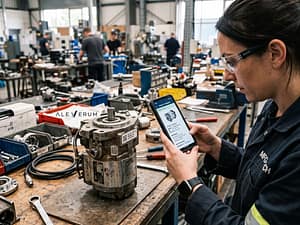


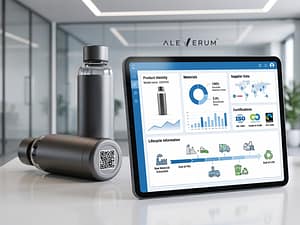

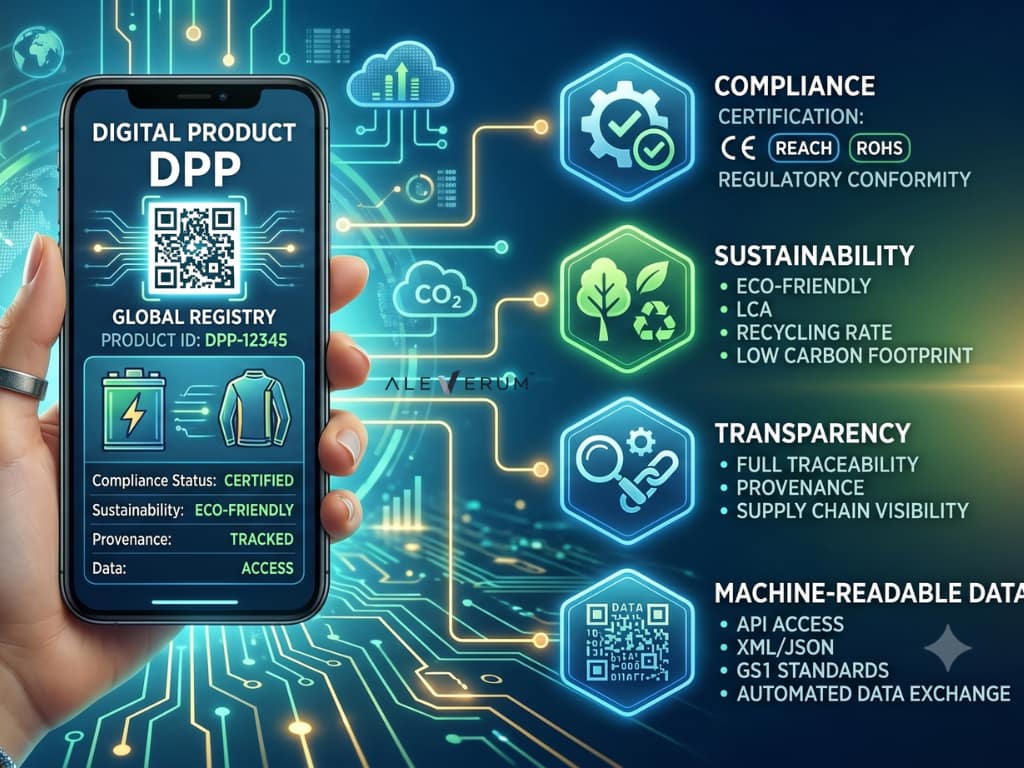
A digital product passport is becoming an important topic for businesses that need clearer, more reliable product information.
For Australian brands, manufacturers, suppliers, and compliance teams, this is not just a technology trend. It is part of a wider shift toward better product transparency, stronger evidence, and more responsible supply chains.
Many businesses already hold useful product information. The problem is that it often sits across spreadsheets, PDFs, emails, supplier portals, certificates, and internal systems. When that information is scattered, it becomes harder to prove product claims, respond to customer questions, or prepare for future reporting needs.
This guide explains what a digital product passport is, why it matters, what it can include, and how Australian businesses can start preparing in a practical way.
What Is a Digital Product Passport?
A simple explanation for business owners
A digital product passport is a structured digital record that stores important information about a product.
It can help show what a product is made from, where key materials come from, how the product was made, what evidence supports its claims, and what should happen to it at the end of its life.
In simple terms, it works like a trusted product profile.
Instead of product information being hidden across many documents and systems, a digital product passport brings key details together in a clearer format. This can make the information easier to access, review, update, and share with the right people.
For example, a product passport may help a business answer questions such as:
- What materials are used in this product?
- Who supplied those materials?
- Are there certificates or documents to support the product claims?
- Can the product be repaired, reused, recycled, or responsibly disposed of?
- What information should customers, partners, auditors, or regulators be able to see?
This does not mean every person sees every piece of data. A good system should allow different levels of access depending on the user, the product, and the business need.
What information it can include
The details included in a digital product passport can vary by industry, product type, and regulatory need.
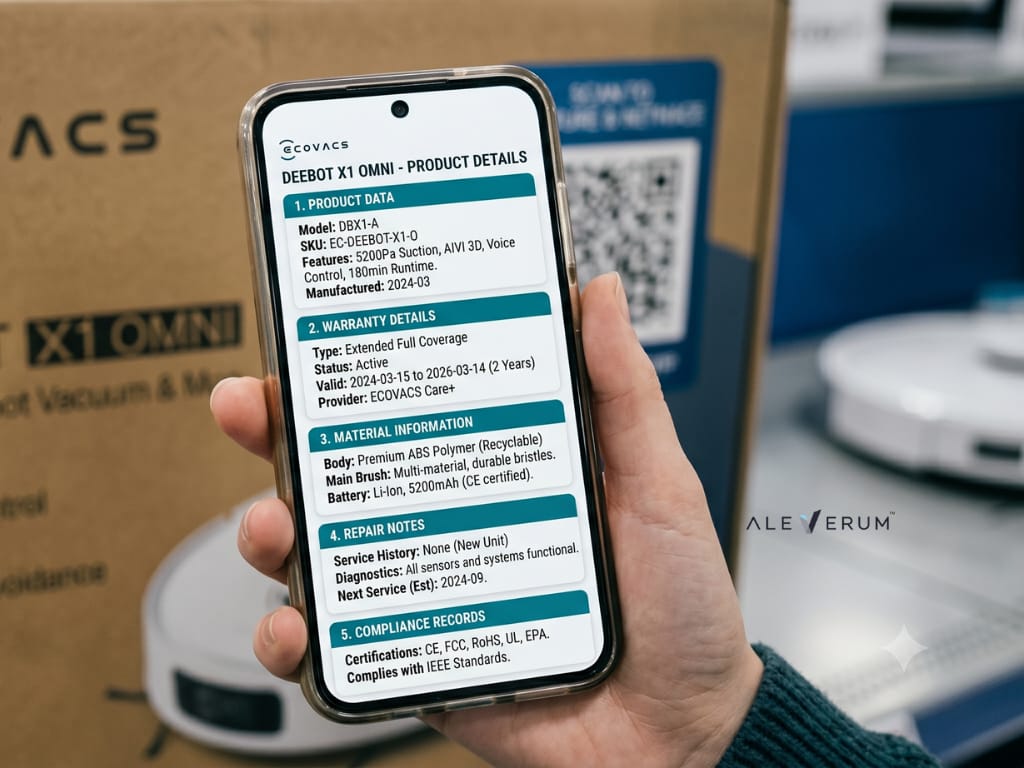
A simple version may include product name, model number, material details, country of origin, care information, and recycling guidance.
A more advanced version may include supplier records, certification documents, lifecycle data, batch details, carbon or environmental information, repair instructions, compliance documents, and verification records.
For some industries, the passport may also connect to a QR code, barcode, NFC tag, or another digital identifier. This allows customers or business partners to access selected product information quickly.
The real value is not the code itself. The value comes from the quality, structure, and reliability of the information behind it.
Why Digital Product Passports Are Becoming More Important
Product transparency is becoming a business expectation
Customers, retailers, regulators, procurement teams, and supply chain partners are asking better questions about products.
They want to know what products are made from. They want to understand where materials come from. They want clearer evidence behind sustainability, ethical sourcing, repairability, and recyclability claims.
For Australian businesses, this matters for both local and international trade.
A brand selling only in Australia may still need better product data to support customer trust, supplier management, ESG reporting, or internal compliance. A business exporting into Europe or working with global supply chains may face stronger expectations because of overseas regulatory changes.
This is one reason the eu digital product passport is being watched closely by Australian businesses. It may not apply to every local business in the same way, but it can influence what global buyers, retailers, and supply chain partners expect from product data.
Any statement about whether your exact products are covered by overseas rules should be checked with a qualified compliance adviser.
Why trust depends on reliable data
Trust is hard to build when product information is incomplete or difficult to prove.
For example, a business may claim that a product uses recycled materials. But if the supplier declaration is stored in an old email, the certificate is expired, and the product record does not link to the evidence, that claim becomes harder to support.
This is where many businesses run into problems.
They have the right documents, but not in the right structure. They may have supplier records, but no easy way to check whether they are current. They may have product data, but not enough evidence to support what is shown publicly.
A digital product passport helps by creating a clearer link between the product, the data, and the proof behind the data.
That does not replace proper due diligence. It simply gives businesses a better structure for managing and presenting product information.
How a Product Digital Passport Supports Better Product Data

Bringing product records into one structure
A product digital passport can help businesses organise product information in a more consistent way.
This is useful because many teams handle product data across different systems. Product teams may manage specifications. Procurement teams may hold supplier files. Sustainability teams may track environmental data. Compliance teams may manage certificates and regulatory documents. Marketing teams may use product claims in public content.
When each team works from different records, errors can happen.
A product may be described one way in a brochure, another way in a supplier file, and another way in a compliance folder. Over time, this can lead to outdated information, duplicate records, and confusion about which version is correct.
A product digital passport can reduce this risk by creating a clearer source of structured product information.
It can help teams see what data exists, what is missing, what needs review, and what evidence supports each claim.
Making information easier to verify
Verification matters because product data is only useful when it can be trusted.
A strong digital product passport system should not only store claims. It should also help connect those claims to supporting evidence.
For example, if a product record says a fabric contains organic cotton, the system should make it easier to link that statement to a relevant certificate, supplier declaration, test report, or approved document.
It should also help track updates. This can include when a document was uploaded, who reviewed it, whether it is still valid, and whether the product information has changed.
This is especially useful for businesses with many products, many suppliers, or complex supply chains.
It can also support audit preparation. Instead of searching through folders and inboxes, teams can review organised product records and supporting documents in one place.
What Australian Businesses Should Know About Regulation
Understanding digital product passport regulation
digital product passport regulation is one reason businesses are paying closer attention to product data.
The European Union has introduced rules through its Ecodesign for Sustainable Products Regulation, which includes a framework for Digital Product Passports.
For Australian businesses, the key point is this: even if a regulation starts overseas, it can still affect local companies that export, supply global brands, work with European partners, or manufacture products that enter regulated markets.
This does not mean every Australian business must immediately create a passport for every product.
The practical first step is to understand your exposure. Ask:
- Do you sell products into the EU?
- Do your customers sell your products into the EU?
- Are your products part of a supply chain that serves global brands?
- Are your buyers already asking for product data, traceability, or compliance evidence?
- Are you making sustainability or material claims that need stronger proof?
If the answer is yes to any of these, it may be worth preparing earlier rather than waiting.
Why the EU digital product passport matters
The eu digital product passport matters because Europe is a major regulatory influence for global product standards.
When large markets require more detailed product information, many suppliers outside that market begin adjusting their data systems too. This can affect manufacturers, brands, importers, exporters, and raw material suppliers in countries such as Australia.
For example, an Australian textile supplier working with a European fashion brand may be asked to provide clearer material composition data, source records, certification evidence, or lifecycle information.
A manufacturer may also need to provide product-level data in a format that can be shared across systems.
The important thing is to avoid panic and focus on readiness.
Businesses can start by improving the quality of their product data, reviewing supplier evidence, and identifying gaps in documents and workflows.
For exact compliance obligations, timelines, affected product categories, and market-specific requirements, seek advice from a qualified compliance or legal professional.
Digital Product Passports and the Circular Economy
How product data supports reuse, repair, and recycling
A product passport circular economy approach is about using better product information to support smarter decisions across the product lifecycle.
The circular economy focuses on keeping products, materials, and resources in use for longer. This can include better design, repair, reuse, resale, remanufacturing, recycling, and responsible recovery.
A digital product passport can support this by making product information easier to access.
For example, repairers may need parts information. Recyclers may need material composition data. Customers may need care guidance. Businesses may need to understand whether materials can be recovered or reused.
Without this information, valuable materials can become waste too early.
With clearer product data, businesses can make better decisions about design, sourcing, maintenance, returns, repair, and end-of-life handling.
In Australia, circular economy planning is becoming more important across government, industry, and supply chains. Any claim about specific circular economy targets or deadlines should be checked against current Australian Government guidance before publication.
Why sustainability claims need evidence
Sustainability claims need more than good wording.
If a business says a product is recyclable, made with recycled content, ethically sourced, low impact, responsibly made, or circular, it should be able to support that claim with reliable information.
A digital product passport can help by linking product claims to evidence.
This may include supplier documents, material certificates, compliance records, test reports, product specifications, repair instructions, and recycling guidance.
This is useful for customers, but it is also useful for internal teams. It helps reduce the risk of unclear claims, outdated claims, and unsupported claims.
It also helps teams review whether product information is complete before it is used in packaging, websites, tenders, ESG reports, or sales documents.
The goal is not to make a product sound better than it is. The goal is to make product information clearer, more accurate, and easier to prove.
How to Choose the Right Digital Product Passport Solution
Look for more than a basic QR code
A QR code can be useful, but it is not the full solution.
A QR code is only the access point. The real value sits in the data system behind it.
When choosing a digital product passport solution, look for a platform that can manage structured product data, supplier evidence, document records, verification workflows, access controls, update history, and future interoperability.
This is important because your needs may grow over time.
At first, you may only want to organise product information and show selected details to customers. Later, you may need to support compliance workflows, supplier reviews, audit preparation, circular economy reporting, or machine-readable product data.
A basic page linked to a QR code may not be enough for that.
A more complete system should help your team manage data quality, not just display information.
Key features Australian businesses should consider
Before choosing a supplier or service, ask practical questions.
Can the system handle different product types? Can it link evidence to specific product claims? Can it manage supplier documents? Can it show different information to different audiences? Can records be updated without losing history? Can the data support future reporting or export requirements?
You may also want to consider:
- Product data management
- Supplier evidence workflows
- Document expiry tracking
- Standards alignment
- Review and approval steps
- Audit support
- Blockchain integrity records, where appropriate
- Machine-readable data
- Secure access controls
- Clear public and private data settings
- Integration options with existing systems
This is where a platform such as Aleverum may be useful for businesses that need more than a simple product page. Aleverum supports Digital Product Passport creation, evidence management, verification workflows, blockchain integrity records, standards alignment, and connected product intelligence.
That kind of support may be helpful if your business needs to manage product, supplier, compliance, and sustainability records in a more reliable way.
When comparing providers, focus on fit rather than hype. The right service should match your product complexity, compliance exposure, team capacity, supplier network, and future data needs.
When to Contact Aleverum About Digital Product Passports
When your product data is scattered or hard to prove
It may be time to contact Aleverum if your team is struggling to manage product data across too many places.
Common signs include supplier documents sitting in emails, certificates expiring without review, product claims being hard to trace, or compliance evidence being difficult to find when needed.
You may also need support if different teams are working from different versions of product information.
For example, your sustainability team may hold one set of material data, your product team may hold another, and your sales team may be using public claims that are not clearly linked to evidence.
This can create risk and slow down decision-making.
Aleverum can help businesses build clearer Digital Product Passport records and organise the evidence behind product information. This can support better internal visibility, stronger review workflows, and more reliable product-data management.
When you are preparing for future transparency requirements
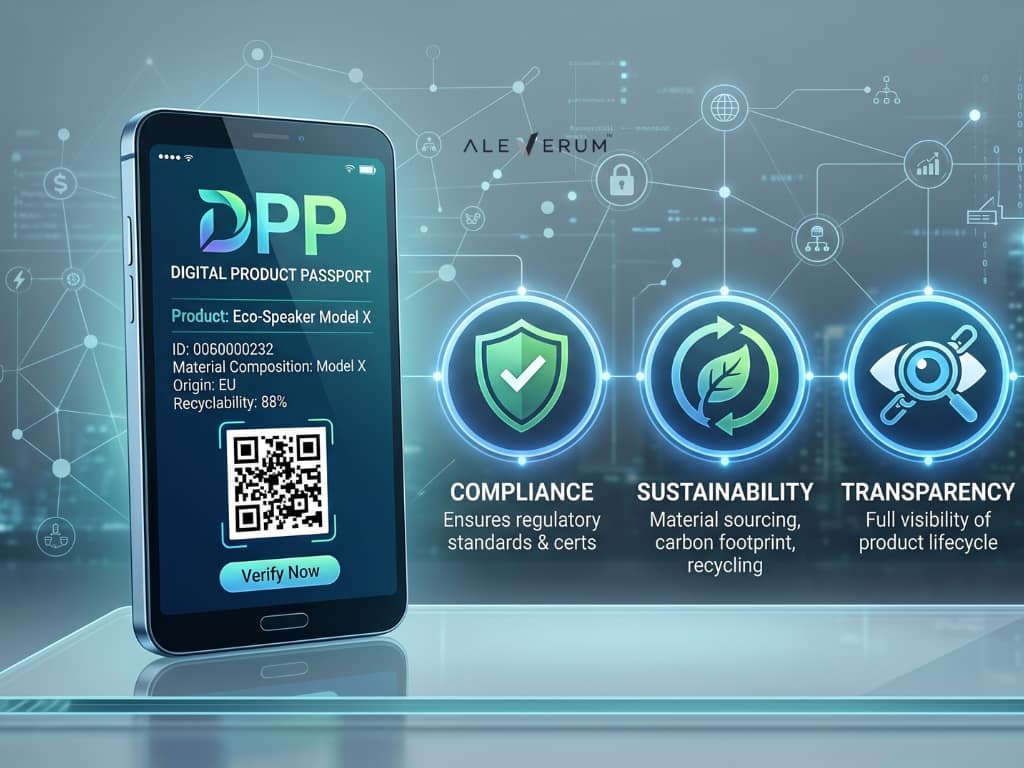
You may also want to speak with Aleverum if your business is preparing for future product transparency, circular economy, ESG, or compliance expectations.
This is especially relevant if you sell into global markets, work with international partners, manage complex supplier networks, or need better product-level evidence.
Aleverum may be useful when you need help with:
- Creating structured Digital Product Passport records
- Managing product and supplier evidence
- Supporting verification workflows
- Recording blockchain integrity data
- Improving standards alignment
- Preparing for machine-readable product information
- Building a more connected product-data environment
A good next step is to review one product range first.
Choose a product that has active customer interest, supplier documentation, sustainability claims, export potential, or compliance exposure. Then assess what data already exists, what evidence supports it, and what gaps need attention.
This keeps the process practical and manageable.
A digital product passport does not need to start as a large project. It can begin with better product data, clearer evidence, and a more reliable way to manage information over time.
