




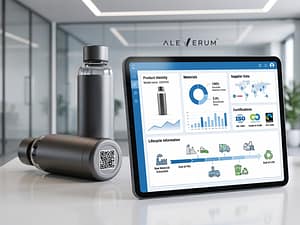


Supply chain traceability is becoming more important because businesses are under more pressure to understand where their products come from, how they are made, what materials are used, and what happens to them after sale. For Australian businesses that manufacture, import, distribute, or export products, this is no longer only an internal operations issue. It can affect compliance, sustainability claims, product quality, customer trust, and readiness for overseas market requirements.
A digital product passport can support this by giving products a clearer and more structured digital record. Instead of relying only on scattered spreadsheets, emails, supplier certificates, PDFs, labels, and internal folders, businesses can move towards a more connected way of managing product information.
This is especially relevant for businesses connected to EU markets. The eu digital product passport is linked to the Ecodesign for Sustainable Products Regulation, which is designed to improve product transparency, sustainability, and circularity across product groups placed on the EU market.
How product information moves across the supply chain
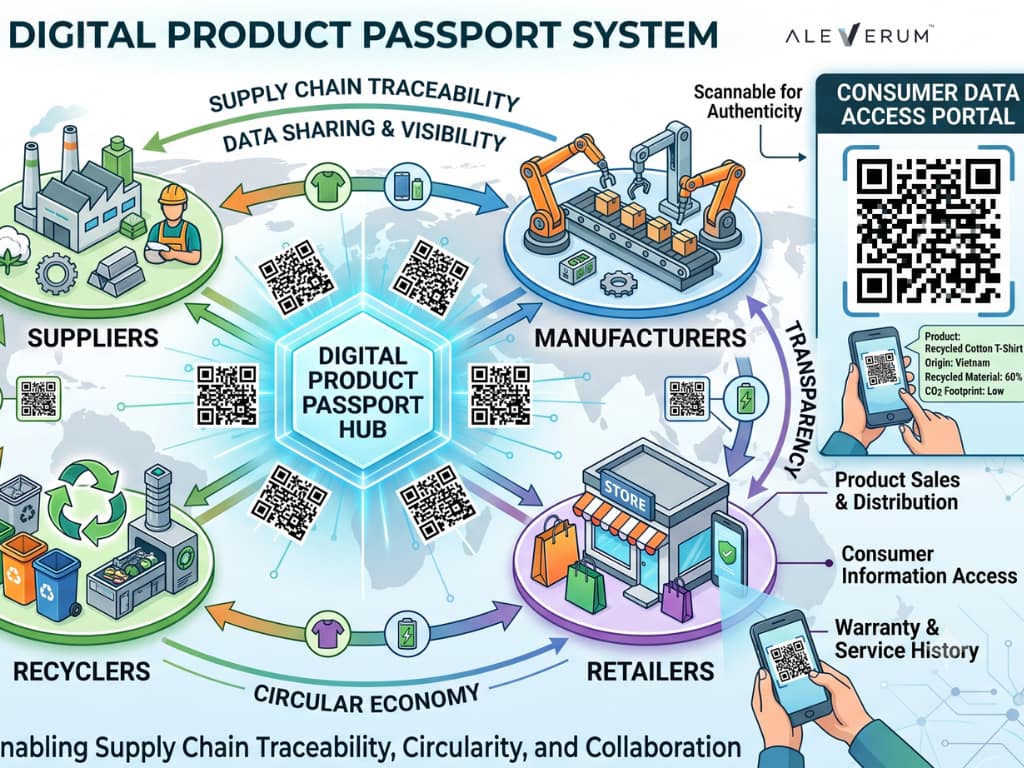
Product information often passes through many hands before a product reaches the final customer. A supplier may provide raw material details, a manufacturer may add production information, a distributor may handle batch records, a retailer may need customer-facing product details, and a recycler may need end-of-life information.
The problem is that this information is often stored in different places. Some details may be in a supplier email. Other information may be in a spreadsheet, certificate, packaging file, product label, ERP system, or PDF document. When information is separated like this, it becomes harder to confirm which version is correct, who updated it, and whether it is still current.
This can create problems when a customer asks about materials, when a retailer requests sustainability information, when an overseas partner needs proof of compliance, or when a product issue needs to be traced back to a specific batch.
Why Australian businesses should pay attention
Australian businesses should pay attention because supply chain traceability is becoming more relevant across manufacturing, textiles, packaging, electronics, furniture, construction materials, batteries, and export supply chains.
Even if a business is not directly regulated by digital product passport regulation today, it may still be affected by customer expectations, retailer requirements, global supplier requests, or export market rules. For example, an Australian supplier that sells into Europe, works with EU brands, or provides components for international products may be asked to provide clearer product data.
Stronger product data can also support better quality control, more reliable sustainability claims, smoother documentation, and clearer communication with supply chain partners. However, any claim about a product being sustainable, recyclable, ethical, or low impact should be supported by evidence. If the claim is not backed by reliable proof, it should be marked for review.
What a Digital Product Passport Adds to Traceability
A digital product passport adds structure to product information. It can help businesses collect, organise, manage, and share product data in a more consistent way. This does not mean every person in the supply chain sees every detail. A well-designed system can provide different levels of access depending on who needs the information.
For example, a customer may only need care instructions, product origin, repair guidance, or recycling information. A retailer may need compliance documents and product specifications. A recycler may need material composition and disassembly instructions. A regulator or authorised partner may need more detailed technical information.
The value of a product digital passport is that it can create one connected product record instead of leaving important details scattered across disconnected files.
A clearer product record from source to end of life
A digital product passport can hold or link to key product information such as product identity, model details, materials, components, supplier data, certification records, safety information, repair instructions, maintenance guidance, environmental data, and recycling details.
For businesses managing many products, this can make product information easier to find and update. It can also help teams understand what information is missing before a customer, retailer, auditor, or overseas partner asks for it.
In circular economy planning, this is especially useful because product value does not stop at the first sale. Repairers may need parts information. Resale partners may need authenticity details. Recyclers may need material information. Customers may need guidance on care, maintenance, and disposal.
Why trusted digital information matters
trusted digital information is important because poor data can lead to poor decisions. If supplier details are outdated, if material information is incomplete, or if certification records cannot be verified, it becomes difficult to rely on the product record.
A digital product passport should not just collect information. It should help make that information accurate, consistent, and usable. This may include clear data ownership, version control, access permissions, verification steps, and links to supporting documents.
For Australian businesses, trusted product information can help reduce confusion between suppliers, manufacturers, distributors, retailers, and customers. It can also make it easier to respond when partners request product data for compliance, sustainability reporting, customer transparency, or product quality checks.
How Digital Product Passports Connect Supply Chain Partners

Supply chains are rarely simple. A single finished product may involve raw material suppliers, component makers, manufacturers, packaging providers, logistics partners, wholesalers, retailers, repairers, recyclers, and customers.
A digital product passport can help connect these groups by giving each product a clearer digital information trail. This does not replace good supplier relationships, but it can reduce the need to manually chase the same documents again and again.
From suppliers and manufacturers to retailers and customers
Different supply chain partners need different types of product information. Suppliers may provide material source, composition, batch references, or certification details. Manufacturers may add production dates, assembly details, quality checks, and product identifiers. Distributors may record where products were shipped. Retailers may use approved product information for customer education, labels, websites, or product pages.
Customers may access selected information through a QR code, serial number, NFC tag, or other digital identifier. This can help them understand product care, repair options, authenticity, materials, or end-of-life guidance.
Repairers and recyclers may also benefit from more accessible product information. For example, repairers may need parts details, while recyclers may need to understand material composition or disassembly steps.
Why shared product data improves collaboration
Shared product data can reduce friction between supply chain partners. Instead of sending repeated emails asking for the latest certificate, specification sheet, batch number, or sustainability document, partners can work from a more structured product record.
This can be useful for Australian suppliers working with overseas partners, especially if those partners need product information for EU market access, retailer reporting, customer-facing transparency, or circular economy programs.
It can also support internal teamwork. Product, compliance, operations, marketing, sales, and sustainability teams often need the same product information, but for different reasons. A clearer digital record helps these teams work from the same source of truth.
The Role of Global Batch Traceability
Global batch traceability adds another layer of detail. While a product passport may identify a product, batch traceability helps businesses understand which batch, component group, supplier shipment, or material source is connected to that product.
This can be important when businesses need to investigate product issues, check supplier changes, review material variations, manage recalls, support warranty claims, or answer documentation requests.
Tracking products by batch, component, or material source
global batch traceability helps identify where materials came from, when products were made, which production batch they belong to, and where finished goods were distributed.
For example, if a material supplier changes a component, the business may need to know which finished products used that material. If a product quality issue appears, the business may need to identify whether it affects one batch, one supplier shipment, or a wider production run.
This is relevant for manufacturers, importers, distributors, exporters, and brands that sell through multiple channels. It is also useful for products with safety, warranty, sustainability, or compliance documentation requirements.
Why batch-level data supports stronger accountability
Batch-level information can help a business respond faster and more accurately. If there is a product issue, the business may be able to narrow the problem to a specific batch instead of reviewing all products.
It can also help when export partners or retailers ask for documentation linked to a specific product group. Instead of manually searching through supplier files, the business can work from a more organised data trail.
This does not remove the need for quality control, supplier checks, or compliance review. However, it can make those processes easier to manage because the information is more connected.
How Digital Product Passports Support Circular Economy Goals

The product passport circular economy concept is based on a simple idea: products should carry useful information across their lifecycle. This information can help people make better decisions about use, repair, reuse, resale, recycling, and responsible disposal.
The EU digital product passport approach is also connected to circular economy goals, including better product transparency and improved access to information that can support repair, reuse, and recycling.
Connecting product data to repair, reuse, and recycling
A product may need different information at different stages of its life. During sale, customers may want to know what the product is made from and how to care for it. When in repair, a technician may need parts information or maintenance guidance. On resale, a buyer may want proof of authenticity or condition. During recycling, a recycler may need material composition or disassembly instructions.
A digital product passport can help make this information easier to access. This can support longer product use, better repair decisions, and more informed end-of-life handling.
However, businesses should avoid making broad environmental claims unless they have evidence. For example, saying a product is “fully circular,” “zero waste,” or “100% sustainable” should only be done if the business has reliable proof and the wording is accurate.
Reducing waste through better product visibility
Better product visibility can help businesses understand what materials are used, where waste may occur, and how products can be designed for easier repair or recovery. It can also help customers and partners know what to do with a product after use.
For example, if a product contains mixed materials, recycling may be more difficult. If the product record includes clear disassembly or material details, it may be easier for repairers or recyclers to make informed decisions.
A digital product passport does not automatically make a product sustainable. The passport is a tool for organising and sharing information. The real value comes when businesses use that information to improve product design, supply chain decisions, repair options, recycling pathways, and customer communication.
How to Choose the Right Digital Product Passport Solution
Choosing the right digital product passport solution depends on your business model, product type, supply chain complexity, export markets, and current data systems.
Some businesses may only need a simple way to organise product information and connect it to a QR code. Others may need deeper support with supplier data, global batch traceability, compliance documentation, system integration, access control, and reporting.
This is why it is important to compare solutions based on practical needs, not just software features.
What to look for before choosing a system or service
Before choosing a system, check whether it can support your product data structure. This may include product categories, model numbers, serial numbers, batch numbers, material details, supplier records, certificates, repair information, recycling guidance, and customer-facing content.
You should also check whether the system supports digital identifiers such as QR codes, NFC tags, or other access points. These identifiers can help connect a physical product to its digital record.
Access control is also important. Not every user should see the same information. Customers may need simple product guidance, while suppliers, retailers, repairers, recyclers, or compliance teams may need more detailed information.
Integration is another key point. If your business already uses ERP, inventory, product information management, ecommerce, CRM, or document storage systems, ask whether the solution can work with those systems or whether data must be managed manually.
Aleverum can be naturally considered in this section when a business needs support building a product passport approach around trusted digital information, supply chain traceability, and product data readiness. This is especially useful for businesses that are unsure whether they need software, data cleanup, traceability planning, or a staged implementation plan.
Questions to ask before investing
Before investing in a product digital passport solution, ask practical questions.
Can the solution support product-level and batch-level information? Can it help prepare for digital product passport regulation if your business exports to the EU or supplies companies that do? Can it manage supplier documents, material records, and certification details? Can different users access different information depending on their role?
It is also worth asking whether the system supports updates over time. Product data is not static. Suppliers change, materials change, regulations change, and customer expectations change. A useful solution should allow records to be maintained, reviewed, and updated.
You should also ask what support is available after setup. Many businesses need help cleaning product data, mapping supply chain information, deciding what to show customers, and identifying what information should remain internal.
When to Contact a Digital Product Passport Provider
It may be time to contact a digital product passport provider when your business knows product data matters but does not have a clear way to manage it.
This is often the case when product information is spread across teams, suppliers, spreadsheets, documents, labels, and systems. It can also happen when export partners start asking for more detailed information than the business currently has ready.
Signs your business may need support
Your business may need support if supplier records are inconsistent, sustainability claims are difficult to verify, batch information is hard to track, or different teams are using different versions of the same product data.
You may also need help if retailers, distributors, or overseas partners are asking for more detailed product information. This may include material composition, product origin, environmental data, repair details, certifications, batch references, or end-of-life information.
Businesses involved in textiles, batteries, electronics, furniture, packaging, construction products, or export supply chains may benefit from reviewing their product data early. The exact timing and requirements can depend on product category and market, so any compliance deadline should be checked against current regulation and legal advice.
What to prepare before speaking with a provider
Before speaking with a provider, gather a basic view of your current product information. This may include product categories, model numbers, supplier details, material information, certification records, batch data, packaging details, care instructions, repair guidance, recycling information, and export markets.
It also helps to list where this information currently lives. For example, it may be stored in spreadsheets, supplier emails, PDFs, ERP systems, ecommerce platforms, shared drives, product labels, or marketing files.
Finally, prepare a list of your main goals. You may want stronger supply chain traceability, better sustainability documentation, EU export readiness, customer-facing product transparency, global batch traceability, or a clearer product passport circular economy strategy.
A good provider should help you understand what information is already available, what is missing, what should be verified, and what steps make sense before choosing or building a digital product passport system.
