




Global batch traceability gives businesses a clearer way to identify what was produced, which materials or ingredients were involved, where a batch went and who may have received it. When a product problem occurs, having this information connected and accessible can make the difference between investigating a specific production batch and trying to trace an entire product range manually.
For Australian food manufacturers, importers and wholesale suppliers, traceability also has a direct connection with recall readiness. Food Standards Australia New Zealand advises businesses to maintain information such as supplier and customer details, transaction dates, batch or lot identifiers and quantities. Relevant food businesses must also have a written food recall system so unsafe products can be identified and removed from the supply chain.
The same principles can apply beyond food. Manufacturers, exporters and other organisations can use structured batch information to understand product history, investigate supplier issues and maintain clearer supply chain traceability across multiple organisations and markets.
Why Global Batch Traceability Matters During a Recall
Global batch traceability helps a business move from a broad product problem to a more specific question: exactly which products may be affected?
Without reliable batch information, teams may need to search through separate spreadsheets, emails, invoices, supplier documents and production records while a recall is already underway. Structured traceability makes it easier to connect an affected product with the production information behind it.
Global Batch Traceability and Faster Product Identification
A batch or lot identifier creates a practical reference point for an investigation.
If a manufacturer discovers that a particular ingredient, raw material, packaging component or production process may have created a problem, the business can use batch records to determine which finished products were connected with that event.
For example, useful records might connect a finished product batch with its production date, relevant ingredients or components, supplier records, quantities produced and destination information.
This does not automatically prove which products are unsafe. What it does is give the investigation a structured starting point.
In food recalls, identifying information can include the product name, date mark, batch code and other identifiers. FSANZ also requires distribution information so affected businesses can be contacted during a recall.
The faster a business can find this information, the sooner it can understand the potential scope of the issue.
Global Batch Traceability and More Targeted Recalls
Global batch traceability can also help businesses avoid treating every unit of a product as though it came from the same production event.
Suppose a particular raw material shipment was used only in two production runs. If the records clearly connect the supplier shipment to those batches and show where those batches were distributed, the investigation can focus on those records rather than starting with every product produced over a much longer period.
This is one reason the level of detail matters.
FSANZ notes that more detailed traceability information, such as lot identification, can support a faster and more targeted response when a product problem occurs.
However, traceability should not be designed simply to make a recall as narrow as possible. The scope of any actual recall needs to be determined from the available evidence, the nature of the risk and the requirements of the relevant authorities.
Once batches can be identified, the next question is what information needs to sit behind those identifiers.
What Global Batch Traceability Information Should You Capture?
global batch traceability is only useful when a batch identifier connects to meaningful information.
A number printed on packaging does not provide much value by itself. The business needs to know what that identifier represents, which production activity it relates to and what happened before and after that production event.
Global Batch Traceability for Products and Production Data
At a practical level, businesses should first decide what represents a traceable production unit.
Depending on the organisation, that might be a batch, lot, consignment or another defined production group.
Records can then connect that unit with information such as the product identifier, production date, quantity, relevant ingredients or materials, packaging information, facility and associated production records.
The right level of detail will vary by industry and product.
A food manufacturer may need information about ingredients and packaging. An industrial manufacturer may need component and material records. A critical mineral processor may need source, facility, production batch and shipment information.
The important point is consistency. If the definition of a batch changes from one system or department to another without clear relationships, finding information during an investigation becomes harder.
Global Batch Traceability for Suppliers and Customers
Global batch traceability should also show what entered the organisation and what left it.
This is where supply chain traceability becomes important.
For relevant food businesses, FSANZ recommends records covering suppliers, customers, transaction or delivery dates, batch or lot identifiers and quantities supplied or received. Businesses should be able to trace inputs such as ingredients and packaging as well as customers receiving finished products.
This creates two important directions of investigation.
A business can trace backwards to determine where an ingredient, material or component originated. It can also trace forwards to determine which customers or distributors received affected products.
For global supply chains, the challenge becomes maintaining those relationships when products cross facilities, suppliers, distributors and national borders.
That is why traceability needs to follow the relationships around a batch, not just the batch number itself.
How Global Batch Traceability Helps Locate Products
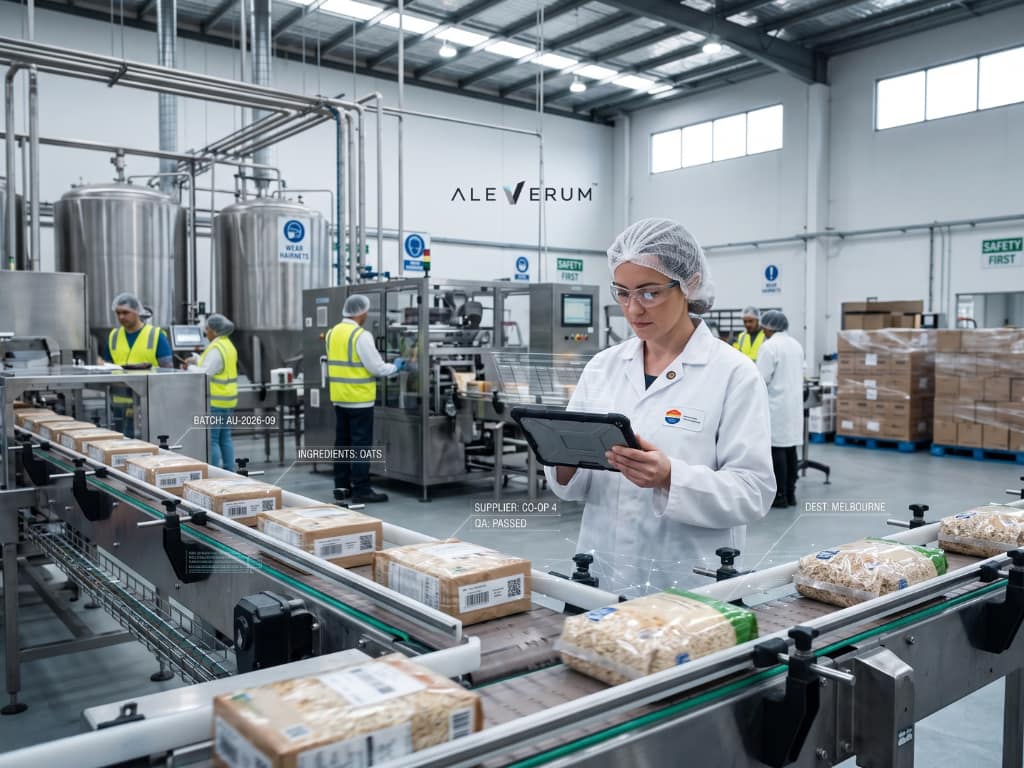
Global batch traceability becomes particularly valuable once a business needs to answer the practical questions involved in a recall: where did the product come from, where did it go and how much is still unaccounted for?
The quality of those answers depends on how well information has been connected before the incident occurs.
Global Batch Traceability Across the Supply Chain
A useful supply chain traceability model connects information in both directions.
Looking backwards, a finished batch may be linked to components, ingredients, source materials, suppliers and facilities.
Looking forwards, the same batch may connect to shipments, distributors, retailers, customers or other downstream organisations.
This creates a chain of relationships rather than a collection of isolated records.
When an upstream supplier reports a problem, the business can investigate which internal batches used the affected input. When the problem is identified internally, the business can investigate which customers received the finished products.
For organisations working internationally, standardised product, material, batch and organisation identifiers can make these relationships easier to maintain between different systems.
The aim is not to collect every possible piece of information. It is to retain the information needed to understand the history and movement of products when that context matters.
Global Batch Traceability for Food Recall Readiness
Traceability in food provides a clear example of why this preparation matters.
Australian food manufacturers, importers and wholesale suppliers must maintain a written recall system. FSANZ guidance states that recall plans should include product identifying information, customer contact details, distribution information and arrangements for recording how much product was distributed and how much remains unaccounted for.
During an actual recall, FSANZ may require a detailed distribution list showing the businesses directly supplied with the affected product.
A business that has this information structured around batches can retrieve it more systematically than one that first needs to reconcile unrelated invoices, emails and spreadsheets.
That does not mean every Australian business needs a complex traceability platform. The appropriate approach depends on products, business size, supply chain complexity and applicable requirements.
The key question is whether the business can retrieve accurate information quickly when it is needed.
Moving Global Batch Traceability Beyond Manual Records
Global batch traceability can be maintained through different technologies. Some organisations begin with spreadsheets or existing enterprise systems, while others use specialised traceability platforms or integrate batch information across ERP, manufacturing and supply chain applications.
The main issue is not whether a system is digital. It is whether information can be found, connected and understood reliably.
Global Batch Traceability Using Digital Systems
Manual records can work in relatively simple environments, but their limitations become more visible as the number of products, batches, suppliers and customers grows.
One spreadsheet might record production. Another may contain supplier information. Customer shipments may be held in an ERP system, while certificates and supporting documents sit in shared folders.
Each source can be individually useful while still leaving important relationships fragmented.
A digital global batch traceability system can help connect these records around a common product, material, batch, supplier or facility.
When comparing systems, businesses should consider whether they can search a batch, see connected inputs, identify downstream destinations and access supporting evidence without manually rebuilding the history each time.
Integration also matters. Requiring employees to enter the same information into multiple applications can introduce inconsistencies and additional administration.
A strong system should therefore complement existing operational systems rather than creating another disconnected data store.
Global Batch Traceability and Blockchain Technology
Blockchain for traceability is sometimes proposed where organisations want an additional record of transactions, provenance or shared supply chain events.
Blockchain can be useful in certain architectures because records written to a distributed ledger can be difficult to alter retrospectively. However, this does not automatically make the information entered into the system accurate.
If incorrect supplier information is recorded, placing that record on a blockchain does not correct the original information.
For that reason, businesses evaluating blockchain should first understand what information needs to be governed, who provides it, who reviews it and how supporting evidence is connected.
Blockchain can then be considered as one component of a broader traceability architecture where it provides a clear benefit.
The practical question should therefore be, “What problem does this technology solve in our traceability process?” rather than, “Do we need blockchain?”
Recall readiness is an important reason to improve traceability, but the same information can support broader supply chain requirements.
Global Batch Traceability Beyond Product Recalls
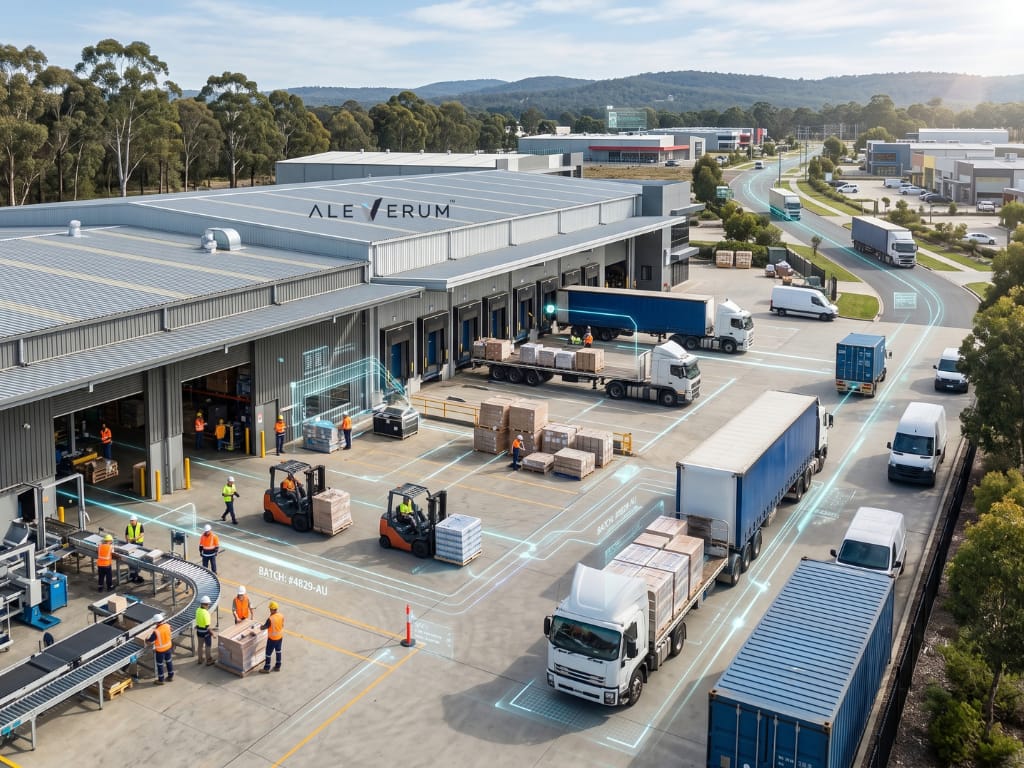
Global batch traceability can continue to provide value even when no recall is underway.
The relationships between materials, batches, suppliers, facilities and evidence can help organisations investigate quality issues, understand sourcing, respond to customer questions and support broader supply chain risk processes.
Global Batch Traceability for Supply Chain Risk
Supplier risk becomes difficult to investigate when a business knows who its suppliers are but cannot connect them with specific products or batches.
A supplier list alone cannot answer questions such as which products contain material from a particular facility or which customer shipments included a particular production batch.
Global batch traceability provides additional context by connecting the supplier relationship with actual product and material records.
This can support investigations when a supplier changes a material, a certification expires, an upstream issue is identified or a facility becomes subject to additional scrutiny.
The same information may also support due diligence activities where businesses need clearer visibility across their value chains.
However, traceability should not be confused with verification. Knowing where information came from and how it relates to a product does not automatically establish that every claim made by a supplier is independently verified.
Global Batch Traceability and CSDDD Third Party Risk
Global batch traceability may also have a role in broader supplier due diligence for organisations exposed to European requirements.
Businesses searching for “supply chain act EU” may encounter several different European sustainability and due diligence measures. One important framework is the EU Corporate Sustainability Due Diligence Directive, or CSDDD.
The CSDDD was amended through the EU’s Omnibus I simplification measures in 2026. Under the amended framework, very large companies within scope must identify and address relevant adverse human rights and environmental impacts in their operations, subsidiaries and chains of activities. The current application timetable has also been postponed, with national implementation measures due in 2028 and general application from July 2029.
CSDDD third party risk management is broader than batch tracking. A batch record by itself cannot determine whether a supplier presents a human rights or environmental risk.
However, structured relationships between suppliers, materials, facilities, products and evidence can help organisations understand where relevant supplier information sits in the value chain.
For businesses evaluating CSDDD solutions, this distinction matters. The goal should not be to treat traceability software as an automatic compliance solution, but to determine whether the system provides reliable information that can support the organisation’s wider due diligence processes.
That leads to the practical question of how to evaluate traceability technology itself.
How to Choose a Global Batch Traceability Solution
Choosing a global batch traceability solution should begin with business requirements rather than a technology feature list.
A food manufacturer preparing for recalls may have different priorities from a mineral processor supplying international battery manufacturers. An organisation with a mature ERP environment may also require a different architecture from a business still managing batch records across spreadsheets.
Global Batch Traceability Features Worth Comparing
Start by asking what information must be connected.
A suitable platform may need to link products with materials, components, batches, suppliers, facilities, evidence, customers and distribution records.
Searchability is particularly important. If a batch issue occurs, authorised users should be able to locate the relevant record and understand its connected information without reconstructing the entire history manually.
Other useful capabilities can include version history, permissions, audit information, evidence management, structured identifiers, integration with existing systems and controlled information exchange.
Businesses should also consider who owns each record and how information is reviewed or approved.
Aleverum™ provides product and asset intelligence infrastructure that connects products, materials, batches, suppliers, facilities and supporting evidence within a governed information layer. Its platform is designed to work with information from enterprise systems, suppliers, documents and APIs rather than positioning traceability as an isolated dataset.
For organisations comparing traceability platforms, these are useful areas to assess regardless of which provider they ultimately select.
Global Batch Traceability: Digital Platforms or Blockchain?
The choice between a conventional digital platform and blockchain should not be treated as a simple either or decision.
A centralised platform may be appropriate when one organisation primarily needs to govern its own batch, supplier and distribution information.
Blockchain may become relevant where multiple organisations need to record or reference transactions across organisational boundaries and where tamper resistance or shared provenance provides a specific operational benefit.
Some systems may use both.
Before selecting either approach, ask practical questions. Can the system connect a supplier material to a finished batch? Can supporting evidence be retained? Can authorised users understand where information came from? Can records be integrated with existing applications? Can affected batches be located quickly?
These questions are more important than whether a platform uses a particular technology label.
Aleverum™ Data Pedigree, for example, is designed to retain source, evidence, methodology, history and governance context around connected information. Aleverum™ also makes clear that traceability and governance do not automatically mean information has been independently verified.
That distinction is important when evaluating any system claiming to provide trusted traceability.
Building Global Batch Traceability for Long-Term Use
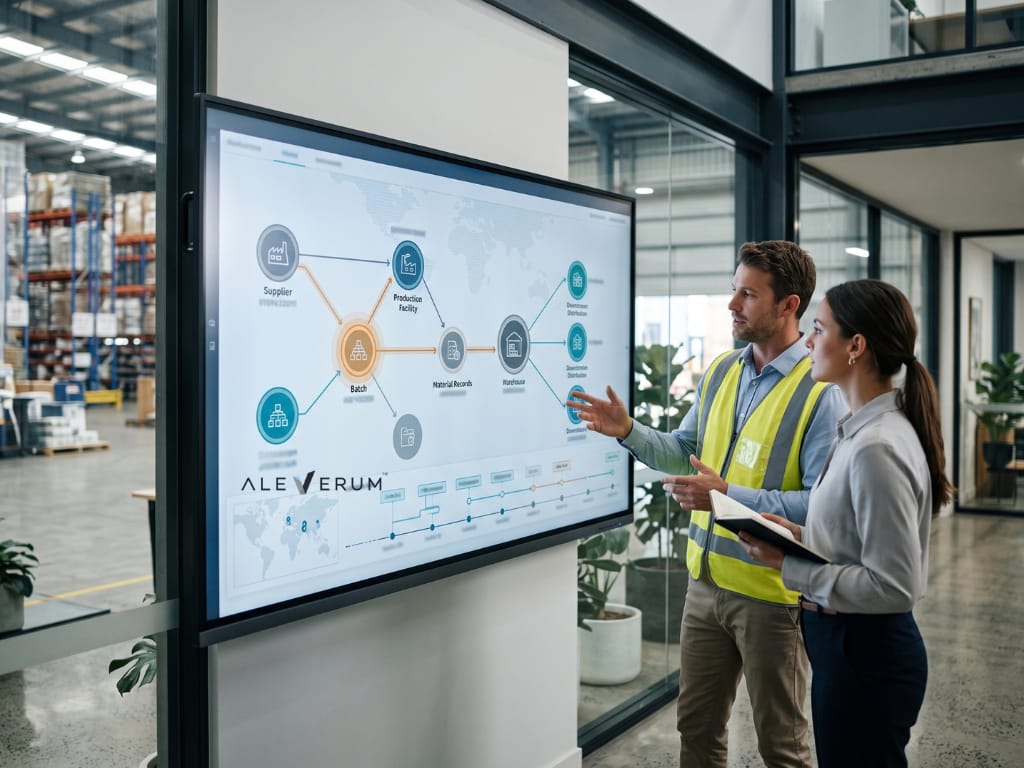
Global batch traceability works best when it becomes part of normal information management rather than something assembled only when an audit, customer request or recall occurs.
Technology can help organise records, but the quality of the system ultimately depends on how consistently people, suppliers and connected systems provide and maintain information.
Global Batch Traceability and Ongoing Data Governance
Clear data ownership should be established from the beginning.
Someone needs responsibility for product identifiers. Supplier records need to remain current. Batch relationships need to be captured consistently. Supporting evidence needs to remain connected with the information it supports.
Businesses should also review whether the traceability process still works as products, facilities and suppliers change.
For recall readiness, testing matters. FSANZ’s recall guidance emphasises having procedures, records and defined responsibilities in place before a recall is required.
A traceability system should therefore be evaluated on whether people can actually retrieve the required information under practical conditions, not simply whether the data technically exists somewhere.
Governance also becomes increasingly important when information is reused for customer disclosures, Digital Product Passports, due diligence or sustainability reporting.
The same batch record may eventually support several business purposes, making source, evidence, version history and approved use important considerations.
Global Batch Traceability for Long-Term Supply Chain Visibility
A well-structured global batch traceability system can begin with a relatively simple requirement: identify affected products quickly when something goes wrong.
Over time, the same information foundation can support wider supply chain traceability by connecting products with the materials, suppliers, facilities, shipments and evidence behind them.
For Australian businesses operating in international supply chains, this can also create a stronger foundation for responding to changing customer and regulatory information requirements.
Aleverum™ supports governed product, material, batch, supplier, facility and evidence information across supply chain, due diligence and Digital Product Passport workflows. Organisations considering this type of infrastructure can review how their current systems manage these relationships and identify where important information remains disconnected.
The practical starting point is not to digitise everything at once. Begin by identifying the products and batches that matter, what information must be available during a recall, where that information currently sits and which relationships are difficult to trace.
From there, businesses can decide whether existing systems are sufficient or whether a more connected traceability platform is needed.
The goal of global batch traceability is ultimately straightforward: when a product issue occurs, the organisation should be able to understand what was affected, where it came from, where it went and which supporting records are available to guide the response.
