






Australia’s circular economy depends on keeping products, components and materials in use for as long as practical. This means moving beyond the traditional pattern of making, using and discarding products. Instead, products should be designed, maintained, repaired, reused, refurbished, remanufactured and recycled wherever suitable.
Australia’s Circular Economy Framework identifies longer product life, reuse, repair, refurbishment and material recovery as important parts of this transition. The Australian Government has also set a national ambition to double Australia’s circularity by 2035.
However, circular systems require more than durable product design and improved recycling facilities. Businesses, customers, repairers and recovery operators also need reliable information about what a product contains, how it was made, how it should be maintained and what should happen when it is no longer needed.
A digital product passport can help make this information accessible across the product lifecycle. Although the regulatory development of these passports is being driven largely by the European Union, the underlying approach is relevant to Australian manufacturers, importers, exporters and product brands seeking better traceability and resource recovery.
Why Australia Needs Better Product Information for a Circular Economy
The information gaps that make products harder to recover
Products often move through long and complicated supply chains. Raw materials may come from several countries, components may be made by different suppliers and final assembly may happen somewhere else entirely.
Important information can become scattered across spreadsheets, invoices, laboratory reports, certificates, emails and supplier portals. By the time a product reaches a repair business, second-hand reseller or recycler, much of that information may no longer be readily available.
For example, a recycler may receive an item without knowing:
- Which materials and components it contains
- Whether it includes substances requiring special handling
- How its parts are connected
- Whether components can be removed safely
- Which materials can be separated and recovered
- Whether the product belongs to a batch affected by a recall
Without that information, a product that could have been repaired or dismantled may be treated as general waste. Materials may also be placed in the wrong recovery stream, reducing their value or contaminating otherwise recoverable material.
This is one reason information is an important part of Australia’s waste and resource recovery approach. The National Waste Policy includes improving information to support innovation, guide investment and help consumers make informed decisions.
Connecting product data with better sustainability decisions
A circular economy works more effectively when each participant can access the information needed for their role.
A customer may want care instructions and information about durability. A repairer may need component diagrams, spare-part references and safe disassembly guidance. A reseller may need evidence of product authenticity and service history. A recycler may need material composition and hazardous-substance details.
A digital passport can connect these different information needs to the same product record. Access does not necessarily mean that every person sees every data point. Public information can be separated from commercially sensitive, personal or restricted information through defined access permissions.
The value comes from providing trusted digital information to the right participant at the right stage of the product’s life.
This can improve decisions such as whether to:
- Continue using a product
- Repair or service it
- Replace a worn component
- Resell or donate it
- Refurbish it for another user
- Recover components for remanufacturing
- Direct materials to an appropriate recycler
Better information does not guarantee that every product will be recovered. Collection systems, product design, local infrastructure and commercial viability still matter. However, reliable data can remove some of the uncertainty that prevents circular options from being considered.
How a Digital Product Passport Works Across the Product Lifecycle
Creating a reliable digital record for each product
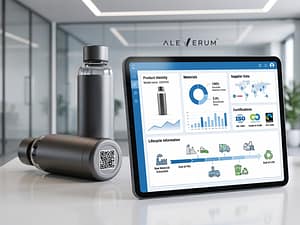
A digital product passport is a structured digital record connected to a physical product, model, batch or item. It can bring together information that would otherwise sit across separate systems and documents.
Depending on the product and applicable rules, this information may include:
- Product name, model and manufacturer
- Unique product, item or batch identifiers
- Material and component composition
- Country or location of manufacture
- Supplier and production-stage information
- Certificates and conformity documents
- Safety and handling information
- Care and maintenance guidance
- Repair instructions and spare-part details
- Durability and recyclability information
- Environmental information
- End-of-life and recycling guidance
The European Commission describes the Digital Product Passport as a way to provide information about product sustainability, durability, repairability, composition and other environmental characteristics. The information available will depend on the relevant product category and legislation.
The passport should not be treated as a marketing webpage with a QR code added to it. A useful product digital passport requires organised data, clear evidence, controlled updates and a reliable connection between the physical product and its digital record.
For example, an apparel passport might include fibre composition, material origin, dyeing and manufacturing stages, care guidance, repair information and recycling instructions. A battery passport may require different data, including chemistry, performance, safety and lifecycle information.
Making information available when it is needed
A passport is usually connected to the product through a data carrier or identifier. Depending on the product and applicable requirement, this could involve a QR code, barcode, serial number, RFID tag or another machine-readable method.
When the identifier is scanned or entered, the user is directed to the relevant digital record.
The level at which the passport is assigned also matters. A business may need records at:
- Model level, where every product of the same model shares one passport
- Batch level, where products from a particular production run share information
- Item level, where each individual product has its own unique record
The right level depends on the product, risk, production process, service model and regulatory obligations.
A low-risk product with consistent materials may only need model-level information. A high-value product with individual service records may benefit from item-level identification. A regulated or safety-sensitive product may require detailed batch or item traceability.
Businesses should decide this early because it affects identifiers, labels, database structure, supplier requirements and ongoing operating costs.
It is also important to plan for the full lifecycle. A passport must remain accessible when a product is repaired, resold or recycled, not only when it first leaves the factory. Businesses should therefore consider who hosts the information, how long it will be retained and what happens if a software provider or manufacturer stops operating.
Supporting Repair, Maintenance and Longer Product Use

Giving repairers access to useful product details
Repair is difficult when technicians cannot identify components, locate instructions or confirm how an item can be opened safely.
A passport can provide practical information such as:
- Product and component identification
- Exploded diagrams or assembly information
- Compatible replacement components
- Repair and maintenance instructions
- Required tools
- Safety warnings
- Warranty conditions
- Software or firmware compatibility
- Recommended service intervals
- Contact details for approved service channels
The European Commission identifies usage guidance, maintenance information, repair instructions and spare-part availability as possible forms of Digital Product Passport information for consumers and other users.
The information needs to be accurate and specific. A statement such as “contact a qualified repairer” provides limited practical value. Clear component references, disassembly steps and safety requirements are more useful, provided they are appropriate for the intended audience.
Access controls may also be needed. General care instructions could be public, while technical procedures involving electrical, chemical or mechanical risks may be restricted to trained or authorised repair professionals.
Helping businesses extend the useful life of products
A passport can also support maintenance before a product fails.
For fleet owners, equipment operators, uniform programs and other business users, a product record may help track:
- Purchase or issue dates
- Inspection results
- Maintenance activity
- Component replacements
- Repairs performed
- Warranty work
- Condition changes
- Refurbishment history
- Reasons for withdrawal from use
This information can help a business decide whether an item should remain in service, receive maintenance, be reassigned or move into a recovery process.
Consider a company managing industrial equipment. Without reliable records, equipment may be replaced because its condition and repair history are unclear. With structured service information, the business may be able to identify which units can be repaired and which have reached the point where replacement is safer or more economical.
The same approach can apply to garments, furniture, electronics, tools, batteries and building products. The exact information changes, but the goal remains the same: making better decisions before a product is discarded.
Businesses should avoid collecting information simply because the technology allows it. Each data point should support a clear operational, regulatory or customer need. This keeps the passport easier to manage and reduces unnecessary data maintenance.
Making Reuse, Resale and Remanufacturing More Practical
Building confidence in second-hand and reused products
Second-hand markets can extend product life, but uncertainty often affects buyer confidence. A purchaser may not know whether an item is genuine, how old it is, whether it has been repaired or whether the stated material composition is accurate.
A passport may help provide selected information such as:
- Product identity and model
- Manufacturing date or batch
- Original specifications
- Authenticity information
- Service and repair records
- Refurbishment details
- Replacement components
- Current condition assessment
- Updated safety or recall information
Not every resale product needs all these details. A simple consumer item may only require basic identification and care information. A high-value piece of equipment may require a more detailed maintenance and inspection history.
Privacy must also be considered. Ownership records and personal details should not automatically become visible to the next purchaser. Businesses need clear rules about which information stays with the product and which information should be deleted, restricted or transferred with consent.
For Australian retailers and manufacturers exploring trade-in, resale or product take-back programs, passport data can help connect the original product with its next use. However, the passport should support the program rather than replace practical processes such as inspection, cleaning, grading, repair and warranty assessment.
Identifying products and materials suitable for remanufacturing
Remanufacturing generally involves recovering a used product or component and restoring it to a defined working condition. Before this can happen, the business needs to know what it has received and whether recovery is technically and commercially practical.
Useful passport information may include:
- Product version and production date
- Component specifications
- Material grades
- Assembly and disassembly methods
- Compatibility with current components
- Previous repairs or modifications
- Operating or usage history
- Safety requirements
- Test and inspection criteria
This can help a remanufacturer separate suitable products from those that are damaged, obsolete, unsafe or uneconomical to recover.
For example, two products may look identical from the outside but contain different internal components because they were made in different years. A reliable identifier can help the remanufacturer retrieve the correct technical information before starting work.
Businesses planning remanufacturing programs should therefore think beyond the customer-facing passport. They may need a controlled technical layer that gives approved partners more detailed information than the public view.
This is where passport design, supply chain traceability and access management need to work together.
Improving Recycling and Material Recovery

Helping recyclers understand what products contain
Recycling outcomes depend partly on the ability to identify and separate materials.
A digital passport could help recyclers understand:
- Material and component composition
- Material grades or resin types
- Recycled-content information
- Coatings, adhesives and finishes
- Hazardous or restricted substances
- Embedded batteries or electronics
- Recommended disassembly steps
- Components requiring separate treatment
- Suitable recovery or disposal pathways
This information is particularly useful for products containing mixed materials that cannot be identified through visual inspection alone.
For example, a recycler handling an upholstered furniture item may need to distinguish timber, steel, textiles, foams, adhesives and surface treatments. An electronics recycler may need to locate batteries, circuit boards and components requiring specialist handling.
Providing the information does not mean a suitable local recycling service will always exist. Australian businesses should avoid telling customers that a product is recyclable without considering whether relevant collection and processing options are reasonably available. Any statement about recyclability, recovery rates or environmental performance should be supported by evidence.
A passport can nevertheless provide clearer handling information and help recovery businesses assess whether a product fits their process.
Australia is investing in recycling and remanufacturing capacity for materials including glass, plastics, tyres, paper and cardboard. Better product and material information can complement this infrastructure by helping direct materials into appropriate recovery streams.
Supporting better global batch traceability
global batch traceability connects a group of products to a particular production run, material lot, supplier delivery or manufacturing period.
This can be useful where item-level identification is unnecessary but businesses still need to trace common characteristics across many products.
For example, a manufacturer may need to identify:
- Which finished products used a particular material batch
- Which suppliers contributed components to a production run
- Which certificates apply to a group of products
- Which products may be affected by a quality issue
- Which items should be recovered, repaired or recalled
- Which recovered materials came from a verified source
A digital product passport can provide an access point, but the underlying data must come from reliable production, supplier and inventory records. A QR code cannot create traceability if the business cannot connect incoming materials with finished outputs.
When comparing traceability approaches, businesses should ask whether the system can:
- Record supplier and batch identifiers
- Link raw materials to finished products
- Track changes during manufacturing
- Store supporting evidence
- Maintain an audit history
- Manage corrected or superseded information
- Identify affected products quickly
- Exchange data with existing business systems
For businesses with international supply chains, consistent identifiers are especially important. Suppliers may describe the same material or component differently, so agreed data formats and naming conventions should be established before information is imported into a passport platform.
Choosing the Right Digital Product Passport Solution
Features Australian businesses should compare
Not every organisation needs the same system. A small manufacturer creating passports for one product range has different requirements from an enterprise managing thousands of products, international suppliers and several regulatory regimes.
Before selecting a platform or provider, define what the passport needs to achieve. The goal may be EU market readiness, better supplier data, customer transparency, repair support, product take-back, regulatory reporting or a combination of these.
Important features to compare include:
- Product, batch and item-level identification
- Configurable product-data fields
- Supplier access and data submission
- Evidence and document management
- QR-code and identifier management
- User roles and access controls
- Public and restricted data views
- Version history and audit records
- Data validation processes
- Support for lifecycle updates
- Integration with ERP, product lifecycle, inventory or ecommerce systems
- Export and data portability options
- Security, backup and retention controls
- Support for recognised identifiers and data standards
- Ability to manage more than one product category
Businesses should request a demonstration using a realistic product rather than a generic sample. This can reveal how the system handles supplier information, certificates, product variations, corrections and access permissions.
It is also useful to ask what happens when data changes. A supplier may renew a certificate, a component may be replaced or a product specification may be updated. The platform should preserve a clear history instead of silently overwriting information that applied to earlier products.
A suitable provider should also be transparent about implementation responsibilities. Ask which work is included in the quoted service, such as data mapping, system configuration, supplier onboarding, integration, training and ongoing support.
When evaluating providers such as Aleverum, businesses should compare the proposed data model, traceability approach, access controls, integration options and process for keeping passport information accurate over time. The decision should be based on operational fit and evidence rather than the appearance of the customer-facing passport alone.
Preparing for local and international requirements
The eu digital product passport is being developed through the Ecodesign for Sustainable Products Regulation and other product-specific EU laws. The ESPR entered into force in July 2024, but detailed passport requirements are being introduced progressively through product-specific rules and related implementing measures.
The EU’s current implementation priorities include product groups such as textiles, furniture, tyres, mattresses, iron and steel, and aluminium, with additional work related to repairability and recycled content for electrical and electronic products.
This distinction is important for Australian businesses. There is not one identical passport template that can be applied to every product. The required data, timing, identifier level and access rules may vary by product category.
Australian manufacturers and exporters should therefore:
- Confirm whether their products are sold or intended to be sold in the EU.
- Identify the legislation and product category that may apply.
- Check whether product-specific requirements have been finalised.
- Map the required information against current records.
- identify missing supplier, material or compliance data.
- Test the process with a limited product range.
- Monitor official regulatory updates.
The digital product passport regulation does not mean every Australian business must immediately place a passport on every product. Obligations depend on market, product category and applicable legislation.
However, businesses that supply European brands or form part of an international supply chain may receive data requests before a direct legal deadline applies to them. Early preparation can therefore be useful, particularly where collecting material and supplier records will take time.
Businesses should obtain legal or specialist compliance advice for formal decisions about whether a regulation applies. A software provider can help structure and manage information, but it should not be the only source of regulatory interpretation.
When to Contact a Digital Product Passport Provider

Signs that your business may need specialist support
A business may be able to begin with an internal data audit. Specialist support becomes more useful when the project involves complex suppliers, integrations, regulated information or several internal teams.
Consider speaking with a provider when:
- You export products to the EU or supply businesses that do
- Customers are requesting detailed product traceability
- Product information is spread across disconnected systems
- Supplier records are inconsistent or difficult to verify
- You cannot reliably connect materials with finished products
- Different teams maintain conflicting versions of product data
- You need public and restricted information views
- You are planning repair, resale or take-back services
- You need to manage passports across many products or variations
- You require integration with existing operational systems
- You need a process for keeping information current after launch
The provider should begin by understanding your products, supply chain and business objectives. Starting with technology before defining the information requirements can create a polished system that does not solve the underlying data problem.
A practical first stage may involve selecting one product family and mapping its journey from raw material or component sourcing through manufacturing, distribution, use and end of life.
This pilot can help identify what information exists, who owns it, where evidence is stored and which gaps need to be addressed before a larger rollout.
What to prepare before discussing a solution
Preparing basic information before meeting a provider can make the discussion more useful.
Gather what is available from the following areas:
- Product list, models and variations
- Bill of materials or component records
- Supplier and manufacturing details
- Batch, serial or stock identifiers
- Certificates and testing documents
- Care, maintenance and repair guidance
- Safety and compliance information
- Existing QR codes, labels or identifiers
- Product lifecycle and end-of-life information
- Current software and data sources
- Target markets and customer requirements
- Internal teams responsible for product data
Do not delay the discussion simply because some information is missing. Identifying the gaps is often one of the first parts of the project.
During an initial consultation, ask the provider to explain:
- Which data is required now and which can be added later
- How supplier evidence will be checked
- Who controls and owns the data
- Where the information will be hosted
- How access permissions work
- How updates and corrections are recorded
- What integrations are required
- How the system can be exported or transferred
- What implementation and ongoing costs apply
- How regulatory changes will be handled
A clear proposal should separate platform costs from data preparation, integration, onboarding and support. It should also explain what the client must provide and what the service provider will deliver.
Aleverum can be contacted when an organisation needs help reviewing its product-data readiness, structuring supply chain information or planning a digital product passport implementation. Before proceeding, request a clearly defined scope covering the pilot products, required integrations, responsibilities, deliverables and ongoing support.
The right starting point is not always a full rollout. For many businesses, a focused product and supply chain assessment provides the clearest view of what is already available and what needs to be improved.
A digital product passport is most valuable when it becomes part of normal product management rather than a separate compliance exercise. When reliable information follows a product throughout its lifecycle, repairers can make safer decisions, resellers can understand product history, remanufacturers can assess recoverable components and recyclers can identify materials more accurately.
For Australian businesses, this creates a practical link between product information and product passport circular economy goals. It can also help organisations prepare for changing international requirements while building stronger internal traceability processes.
To assess your current readiness, speak with Aleverum about mapping your product data, supplier records and lifecycle information before selecting a passport platform or beginning a broader implementation.
