


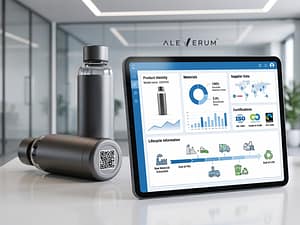


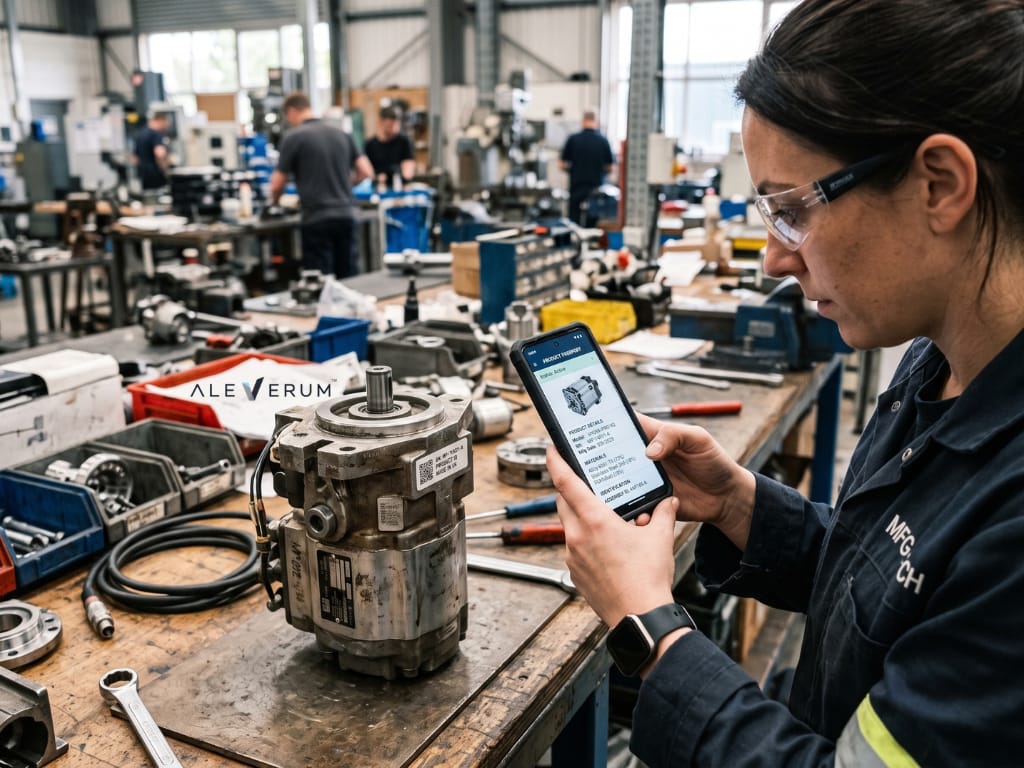
A digital product passport platform can help businesses organise the product information, identifiers, evidence and system connections needed as Digital Product Passport requirements move from policy into practical implementation. For Australian manufacturers and exporters supplying relevant products to the European Union, this is becoming more important now that the EU Digital Product Passport Registry is operational.
The European Commission launched the Registry on 20 July 2026. It acts as an EU-level indexing service for Digital Product Passports, storing unique identifiers, registration information and high-level metadata rather than the complete product information contained in each passport. The detailed Digital Product Passport data remains decentralised and under the responsibility of the relevant economic operator.
This distinction matters when choosing technology. A business does not simply upload a product file to a central EU database and consider the job complete. It needs an information foundation capable of maintaining product data, managing changes and supporting the required Registry workflow.
Understanding the EU Digital Product Passport Registry
A digital product passport platform needs to work within the wider EU DPP architecture rather than treating the Registry as the entire passport system.
How a digital product passport platform fits into the EU Registry
The DPP Registry and the Digital Product Passport perform related but different roles.
The Registry provides a common EU-level index. It stores unique identifiers, registration information and high-level metadata associated with registered passports. The more detailed information contained in the Digital Product Passport remains decentralised and can be hosted by the economic operator or through an appropriate DPP service provider.
For businesses, this means a digital product passport platform may need to manage much more than the final registration step. It should be capable of maintaining the underlying product information that the passport depends on.
Registration is currently available through both a secure user interface and an application programming interface, or API. The API option is particularly relevant to businesses that may need registration to connect with existing digital systems or operate at larger scale.
The European Commission has also made a testing environment available so economic operators can explore Registry workflows without affecting live information. Its current resources include a user guide for economic operators covering organisation enrolment and the registration and management of DPPs.
Why a digital product passport platform matters for Australian exporters
Australian companies are not automatically subject to every EU digital product passport requirement simply because they export goods.
The relevant obligations depend on the product, the applicable EU legislation and the role of the economic operator placing that product on the EU market.
However, Australian manufacturers and supply chain businesses that provide products or materials into affected European markets may increasingly encounter requests for structured product information.
A digital product passport platform can help businesses prepare by improving how product identities, materials, supplier information, evidence and lifecycle information are maintained.
The first mandatory implementation deadline is 18 February 2027 for certain categories of batteries. Further product-specific requirements are being developed progressively, so businesses should confirm the rules applying to their own products rather than relying on a single generic DPP checklist.
Preparing Product Data Before Registration
A digital product passport platform is most useful when the underlying information has been organised before a business reaches the registration stage.
How a digital product passport platform organises product information
The exact information required in a Digital Product Passport varies according to the legislation applying to the product category.
That makes it important to separate the underlying product information from a fixed reporting template.
A business may already hold useful information about product identity, materials, components, manufacturers, suppliers, facilities, certifications and environmental characteristics. The problem is often that these records sit across different systems.
Engineering may own technical specifications. Procurement may hold supplier information. Sustainability teams may manage environmental records, while supporting certificates sit in shared drives or email attachments.
A digital product passport platform can help establish relationships between those records.
Instead of treating a material, supplier, facility and product as separate pieces of information, the system can maintain the context showing how they relate.
This becomes particularly valuable when the same material or supplier is associated with multiple products. Rather than repeatedly creating disconnected records, businesses can maintain a more structured information foundation.
How a digital product passport platform supports trusted digital information
Good DPP preparation involves more than collecting data.
Businesses also need confidence about where information came from, whether it is current and what evidence supports it.
A digital product passport platform can help maintain trusted digital information by preserving source records, ownership, version history and supporting evidence.
For example, if a supplier provides updated information about a material, teams should be able to determine what was previously recorded, when the new information arrived and which products may rely on that material.
This becomes particularly important when product information changes after the initial passport is created.
Trust does not come simply from putting information into software. The platform provides the structure, but businesses still need appropriate governance, supplier engagement and review processes.
Managing Product Identifiers and Data Carriers
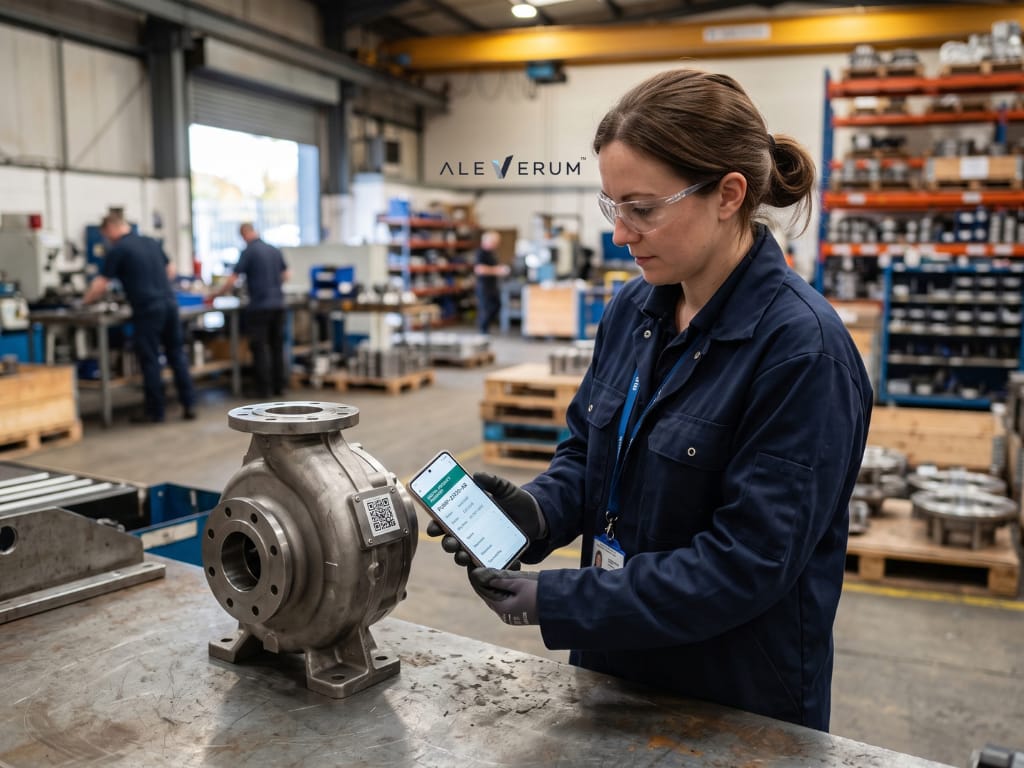
A digital product passport platform also needs to support the connection between the physical product and its digital record.
How a digital product passport platform manages product identifiers
Unique identifiers sit at the centre of the DPP architecture.
Under the Ecodesign for Sustainable Products Regulation, a Digital Product Passport must be connected through a data carrier to a persistent unique product identifier. The applicable product-specific legislation determines whether requirements operate at model, batch or item level.
That means product identification should be considered early in implementation.
A digital product passport platform should help businesses maintain a clear relationship between the identifier and the correct underlying product record.
This can become more complex when a company has multiple models, versions, production batches or product variants.
The identifiers themselves should not become another isolated dataset. They need to remain connected with the product information and evidence they represent.
The ESPR also requires DPP information to use open standards and interoperable formats and, where appropriate, to be machine-readable, structured, searchable and transferable without vendor lock-in.
These requirements make interoperability an important consideration when evaluating a platform.
How a digital product passport platform connects QR codes with product data
A QR code may be the most visible part of a Digital Product Passport, but it should not be confused with the passport itself.
The data carrier provides access to the relevant digital information. The value lies in the product record and the systems maintaining the information behind that access point.
A digital product passport platform should therefore do more than create QR codes.
Businesses need to consider what happens when product information changes, when evidence is updated or when different audiences need access to different information.
A static QR code linked to an unmanaged page does not solve those underlying data-management requirements.
This is one of the key differences between basic passport software solutions and platforms designed for ongoing product information governance.
Keeping Passport Information Accurate Over Time
Creating the first Digital Product Passport is only part of the task. A digital product passport platform should also help organisations manage information as products, suppliers and evidence change.
How a digital product passport platform manages changing product data
Products rarely remain unchanged throughout their commercial life.
Materials may change. Suppliers may change. Manufacturing facilities may be updated. Environmental information may improve. Certifications can expire or be renewed.
A digital product passport platform can help businesses maintain these changes within an organised product record rather than requiring teams to manually update several disconnected files.
This is especially valuable when a change affects more than one product.
For example, if the same component is used across several products, an updated supplier record may have implications for each one. A structured system makes those relationships easier to identify.
This also supports a more realistic approach to digital product passport regulation. Rather than viewing compliance as a one-time data-entry project, businesses can treat product information as something that needs ongoing governance.
How a digital product passport platform reduces version-control problems
Version control is a common weakness of manual product-data management.
One team may update a spreadsheet while another continues using an earlier version. A certificate might be replaced but the previous file remains in a shared folder. An environmental figure could be revised without everyone knowing which record should now be used.
A digital product passport platform can help maintain a clearer history of these changes.
Teams can understand what information is current, what has been superseded and when changes occurred.
This does not guarantee that the newest information is automatically correct. People still need to review important changes.
The benefit is that the organisation has a clearer information trail rather than several competing files with no obvious source of truth.
For businesses preparing a product digital passport, that clarity becomes increasingly valuable as the volume of information grows.
Supporting EU DPP and Circular Economy Requirements

A digital product passport platform should also be flexible enough to support different product-specific requirements as the EU DPP framework develops.
How a digital product passport platform supports EU DPP requirements
There is no single universal DPP data template that applies identically to every product category.
The ESPR establishes the overall framework, while product-specific requirements determine what information must be included for affected products.
The Commission is introducing those requirements progressively. Its current implementation roadmap includes certain batteries from February 2027, alongside further work for product groups such as iron and steel, construction products and other priority sectors.
A digital product passport platform should therefore allow organisations to manage a common product-data foundation while adapting the information required for individual products.
This reduces the need to build a completely separate information environment each time another product category becomes subject to DPP requirements.
Businesses should still follow the specific legislation applying to their sector. A platform can support the process, but it cannot determine automatically which legal obligations apply to a particular product.
How a digital product passport platform supports circular economy information
Digital Product Passports are also intended to contribute to wider circular economy objectives.
Depending on the product category, relevant information may help users understand aspects of a product’s materials, maintenance, repair, reuse, recycling or end-of-life management.
A digital product passport platform can help maintain these relationships by connecting product records with the information required across different lifecycle stages.
This is where the connection between a product passport and circular economy objectives becomes more practical.
Instead of sustainability information existing separately from operational product data, relevant environmental and lifecycle information can remain connected with the product it describes.
However, businesses should avoid assuming that every possible circularity data point belongs in every passport. The required information depends on the applicable product-specific legislation.
Choosing a Platform for EU Registry Readiness
Selecting a digital product passport platform should begin with the information and operational requirements of the business rather than the appearance of the customer-facing passport.
What to look for in a digital product passport platform
A strong evaluation should look beneath the QR code and consider how the platform manages the complete information process.
Businesses should examine whether the system can maintain product, material, supplier and facility relationships; connect evidence with the information it supports; manage versions and permissions; and integrate with existing enterprise systems.
Identifier management, API capabilities and data portability also deserve attention.
The EU Registry itself supports registration through an API, while the broader DPP framework places a strong emphasis on interoperability. The Commission has also published harmonised DPP standards addressing areas including unique identifiers, interoperability, data carriers, APIs, data exchange protocols and data storage.
This means businesses should ask how easily a platform can work with other systems rather than assuming their DPP solution should become an isolated database.
They should also distinguish between functionality available now and features that a provider intends to add later.
How a digital product passport platform compares with passport software solutions
Passport software solutions can vary considerably.
Some focus primarily on publishing product information and providing a QR-code experience. That may be suitable for organisations with relatively simple data requirements.
Other businesses may need deeper connections between products, components, materials, suppliers, facilities, environmental information and evidence.
Aleverum™ is designed around a governed product and asset information foundation, including product, material, supplier and facility records, evidence governance, Data Pedigree and enterprise integration.
For an organisation comparing Aleverum™ or another digital product passport platform, the decision should be based on the actual information problem the business needs to solve.
A company with a small number of straightforward product records may have very different requirements from a manufacturer managing complex supply chains and thousands of interconnected records.
The right choice is therefore not necessarily the system with the longest feature list. It is the one that fits the organisation’s products, existing systems, governance needs and likely regulatory obligations.
Building a Scalable DPP Information Foundation

A digital product passport platform should ultimately help businesses create product information that can remain useful as requirements and product categories evolve.
How a digital product passport platform supports long-term readiness
Businesses preparing for an EU digital product passport should avoid treating each new requirement as a completely separate data project.
A better starting point is to understand the information already available.
Identify where product specifications are stored, who manages supplier information, where environmental evidence sits and which systems contain authoritative records.
From there, businesses can identify gaps and determine what needs to be connected rather than immediately replacing systems that already work.
A digital product passport platform may sit alongside ERP, PIM, PLM or other enterprise systems. The appropriate architecture will depend on the business.
This approach can reduce duplication because the DPP becomes another governed use of product information rather than a completely separate information silo.
How a digital product passport platform supports future product categories
The EU DPP framework is designed to expand progressively across product groups.
That makes flexibility important for Australian businesses supplying more than one sector or planning long-term access to European markets.
A digital product passport platform built around structured product information can provide a stronger foundation for adapting to future requirements because the organisation already understands its products, identifiers, suppliers, evidence and information ownership.
Businesses should still monitor product-specific legislation and current European Commission guidance. The Commission itself advises users to check for updated documentation, and its DPP resources were updated again in September 2026.
The practical first step is therefore not simply to ask, “Do we have a Digital Product Passport?”
A more useful set of questions is whether the business knows where its product information comes from, whether important evidence is connected with that information, whether records can be updated without losing their history and whether the underlying systems can support Registry workflows as requirements apply.
If those areas are difficult to manage today, reviewing a structured digital product passport platform may be a sensible next step.
For organisations preparing product information for future DPP requirements, Aleverum™ can support a governed approach to product, material, supplier, facility and evidence data while connecting that information with broader enterprise workflows.
